
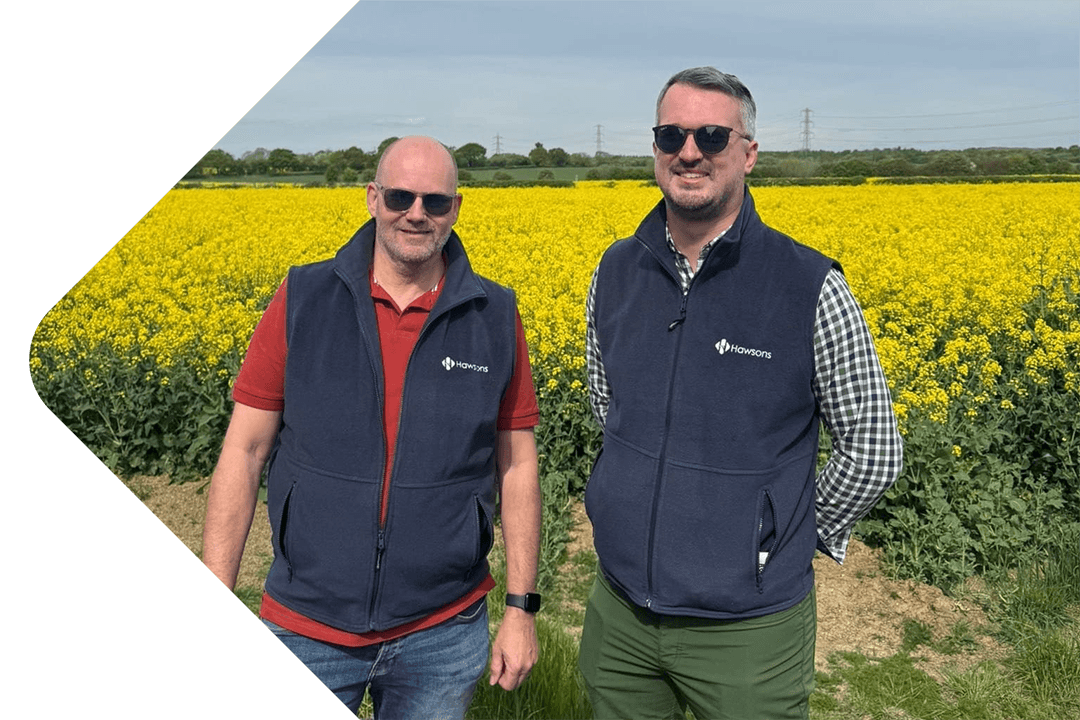

Dan Wood
Partner
You’ve worked hard to build something lasting. Don’t let VAT mistakes catch you out.
It all starts with a small decision…
You’ve just put up a new grain store. The builders have finished, you’ve got the invoice in your hand, and you’re wondering if you can reclaim the VAT in full.
A few weeks later, you let out one of your barns for short-term storage. It all seems straightforward until a question from HMRC comes through the letterbox.
Hawsons Partner, Dan Wood says: "VAT is part of most farming businesses, but it doesn’t always play fair with real life. The rules can feel like a moving target, especially when the farm is evolving. Honest mistakes can lead to unexpected bills, clawbacks, or penalties."
"That’s why I’ve put together this guide. These are the farming VAT mistakes we see most often and the steps you can take to avoid them."
You might be in the partial exemption trap without realising
If you’ve got income from letting land or buildings, holiday lets, solar panels or small-scale retail, that part of the business may be VAT-exempt. This limits how much input VAT you can reclaim.
Once your business has both exempt and taxable income, you must only reclaim the business-use portion of VAT. It’s easy to miss this shift if your business is partially exempt.
🟢 Quick tip: If you’ve started any new income streams this year, double check whether they’re exempt. A small change can tip the balance when it comes to VAT.
Letting land? It’s not as simple as it looks
Letting a field for grazing or storage is usually exempt from VAT, but that’s not always good news. It can restrict how much VAT farmers can reclaim on costs that support the wider farm.
If you supply services alongside the letting (e.g. handling livestock or maintaining fencing), the VAT treatment may change.
Sometimes, opting to tax land or buildings can help. But it has to be done properly and declared to HMRC in writing.
📋 Land rental VAT guide:
| Type of Use | VAT Treatment |
| Grazing land, no services | Exempt |
| Storage space, long-term let | Exempt |
| Land with services (e.g. equipment, staff) | Often taxable |
| Holiday lets or camping pitches | Taxable – standard rated |
| Property opted to tax (correctly) | Taxable |
🟢 Quick tip: Don’t rely on what “used to be fine”. If you’re changing how you use your land or buildings, check the VAT position before letting.

Make sure you’re using the correct VAT rate
Different farming supplies fall under different VAT rates. And if you’re not careful, you can get caught claiming or charging the wrong one.
- Feed, seed, and fertiliser: often zero-rated
- Electricity for domestic use: 5 percent
- Contracting services (e.g. spraying or baling): standard rated at 20 percent
- Machinery and fencing: standard rated at 20 percent
🟢 Quick tip: Always check the purpose and use of an item. A fence around grazing land is treated differently from a fence around a campsite.
The de minimis limit catches more farms than you’d expect
If you’ve got exempt income, you can only reclaim all your VAT if you stay under the de minimis limit. That means:
- Exempt input VAT must be less than £625 per month, and it must be less than 50% of total input VAT
If you go over that, you’ll need to restrict how much VAT you claim.
🟢 Quick tip: If your accountant doesn’t ask about your exempt income each year, bring it up. The rules are easy to miss and expensive to fix.
Big purchases can bring big VAT problems if not handled properly
Buying a new tractor, putting up a building, or investing in renewables? These high-value projects often trigger HMRC attention.
You’ll need:
- A full, valid VAT invoice
- Proof of business use
- Consistent records showing how the asset supports your trade
If it’s partly used privately for example, a vehicle the family also uses the VAT claim must be reduced accordingly.
🟢 Quick tip: Don’t wait until the invoice arrives. Talk to your accountant before the order is placed to make sure the VAT position is clear.
Farm and family often overlap – but VAT expects a clear divide
It’s common for heating oil, electricity, internet, or mobile phone bills to serve both the farmhouse and the farm. But VAT farmers can claim back must be based only on business use.
HMRC expects a fair, reasoned split and you need to stick to it year on year.
🟢 Quick tip: Review shared costs annually. A 60/40 split is fine, as long as it’s consistent and based on actual use.
Hire purchase? Don’t just trust the paperwork
VAT on hire purchase agreements can be confusing. Sometimes the VAT is due up front, sometimes across instalments and it all depends on how the contract is structured.
We’ve seen farms claim VAT too early or too late because they relied on supplier paperwork alone.
🟢 Quick tip: Before signing the finance agreement, ask whether VAT is due in full at the start. If in doubt, let your accountant review it.
Part-exchanges need careful handling
Swapping your old John Deere for a newer model? That part-exchange still counts for VAT purposes. The value of the item you traded in must be included in your VAT return.
🟢 Quick tip: Make sure you get a full breakdown on the invoice. If the part-exchange isn’t recorded properly, you could end up under-declaring VAT.
Selling kit or passing it to family? VAT may still apply
Selling second-hand machinery or transferring farm assets to the next generation can trigger VAT liabilities, even if no money changes hands.
These are sensitive areas. You’re trying to do the right thing by the family, and it’s vital to get the VAT side sorted quietly and cleanly.
🟢 Quick tip: Talk to us before transferring any assets. Done correctly, it can be VAT neutral. Done casually, it can cost more than it needs to.
Changed your structure? Make sure VAT keeps up
If you’ve moved from a sole trader to a partnership, or set up a limited company, your VAT registration may need changing.
We’ve seen cases where the VAT return was filed under the wrong entity which can cause delays, penalties, and even double taxation.
🟢 Quick tip: Don’t assume anything rolls forward automatically. Always notify HMRC if the legal structure of the business changes.
✅ Before your next VAT return, ask yourself:
- Have we claimed VAT on anything partly used at home?
- Has our income mix changed this year?
- Have we made any high-value purchases recently?
- Is our paperwork ready if HMRC were to ask questions?
If any of these give you pause, we’re always happy to take a look. A quick review now could stop a much bigger problem later.
Contact us
If you have any questions, please feel free to call us on (01302 367262) or drop us a line using the contact form below.
Frequently Asked Questions
What VAT can farmers claim back?
Farmers can usually reclaim VAT on goods and services used solely for business purposes. This includes machinery, fertiliser, feed, fuel, and professional services. Anything used partly for private purposes should be reduced accordingly.
Do farmers have to pay VAT on land rental?
Letting land is usually VAT-exempt. If you are VAT-registered, this may reduce the amount of VAT you can reclaim on related costs. In some cases, you can opt to tax, but this must be registered properly with HMRC.
What is the VAT de minimis rule for farms?
If your exempt input VAT is under £625 per month and no more than 50 percent of your total input VAT, you can usually reclaim all your VAT. Once those thresholds are exceeded, a restriction applies.
What VAT rate applies to farming services?
It depends on the service. Contracting work is usually standard rated at 20 percent. Some goods like animal feed and seed are zero-rated. Electricity may be a reduced rate for domestic use. Always check the rate before invoicing or claiming.
How do part-exchanges affect VAT on a farm?
When you part-exchange a piece of machinery, the value of the item traded in must be included in your VAT calculation. Missing this can lead to under-declared VAT and penalties.
Related content

Farming Partnerships: Why the Structure Matters for Tax and Control
dw@hawsons.co.uk What is a farm partnership and why does structure matter? A farm partnership is a common structure for family-run farms in the UK. A farming partnership agreement sets out who owns the land, how profits are shared and what happens when circumstances...

Farm Accounts: Are you making the most of your Management Information?
dw@hawsons.co.uk Still only checking your books at year-end? When we speak to farming clients, there’s a pattern we see time and again. Most farms still only look at their accounts once a year, usually around tax time. Bookkeeping is something that gets done late at...
Making Tax Digital for Farmers: One-Year Reprieve
dw@hawsons.co.uk You’ve wrapped up harvest and drilling, you’re sorting the paperwork, and then you hear HMRC wants quarterly digital reports. Sound familiar? Thankfully, there’s good news. Following pressure from farming groups and professional bodies, HMRC has...